Best Walkers for Seniors: 7 Picks by Need (Narrow, Lightweight, Heavy-Duty, Travel)
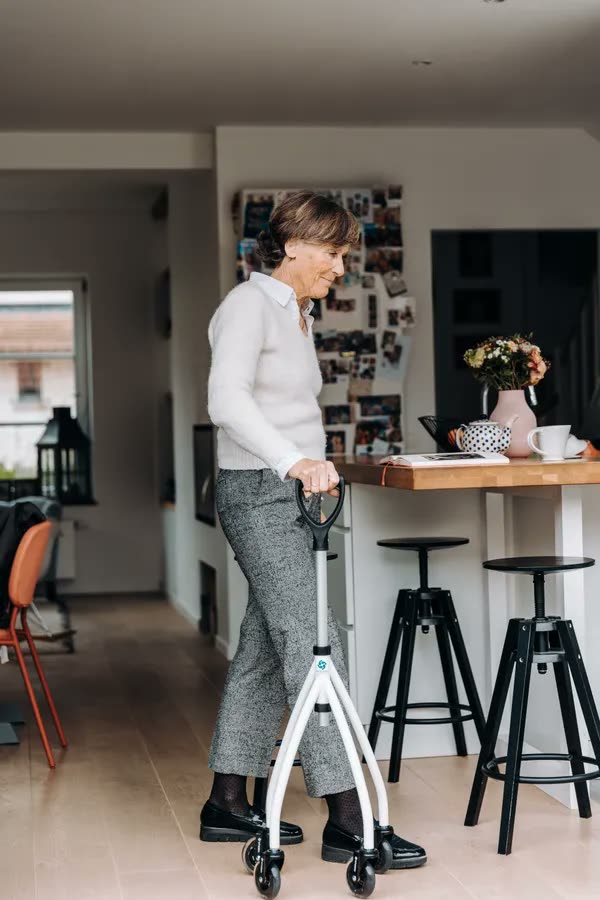
There is no single "best walker." There is a best walker for a person who needs maximum stability, a different one for a person with narrow bathroom doors, and a different one again for a person who has to lift it into a car trunk every day. This guide is organized by need. Each pick states the manufacturer's own specifications — weight, weight capacity, and height range — because those three numbers, plus a correct fit, matter more than brand or price.
How these picks were made: from manufacturers' published specifications and stated design purposes — not from hands-on testing, which we don't claim. Where a need is best served by a type of walker rather than one model, we say so and give you the specification checklist to shop with. Prices change constantly, so we don't print them; check the specification numbers, not just the price tag, when you compare retailers.
First, the fit rule every pick depends on
Whatever you buy, adjust it correctly: standing tall in your usual shoes with your arms relaxed at your sides, the walker's handles should sit at the crease of your wrist. Too low and you will stoop; too high and the walker won't support you properly. Every model below adjusts over a stated height range — confirm your wrist height falls inside it before ordering. If a physical therapist or doctor recommended a specific type of aid, follow that recommendation over any buyer's guide, including this one.
1. Best all-around walker: Drive Medical Deluxe Two-Button Folding Walker with 5″ Wheels (10210-1)
The classic two-wheel walker, and the default choice for most people: front wheels let it glide forward without lifting, while the rear legs still plant firmly when you lean on it. Per Drive Medical's specifications, it weighs about 7.5 lb, supports up to 350 lb, adjusts from 32″ to 39″ in handle height, and has 5″ front wheels. It folds flat with two push buttons for storage or a car trunk. If you don't have a specific special need below, start here.
2. Best for maximum stability: a standard walker with no wheels
Wheels trade a little stability for easier movement. For someone who needs to put real weight through the frame with every step — early recovery, significant weakness — a four-tip standard walker is the steadiest option there is, because nothing rolls. Look for: an aluminum frame, a stated capacity of at least 300 lb (Drive Medical's Deluxe Two-Button standard walker is rated to 350 lb), two-button folding, and a height range that includes your wrist height. The trade-off is effort: a standard walker must be lifted and placed with each step, which is tiring over distance — one reason many people graduate to a two-wheel model or a rollator as strength returns.
3. Best heavy-duty walker: Drive Medical Bariatric Aluminum Folding Walker (10220-1)
Standard walkers top out around 300–350 lb of capacity. Drive Medical's bariatric model is built wider and deeper with steel legs and side braces, and the manufacturer rates it for individuals up to 600 lb — while keeping the walker itself at about 9 lb. If the user is anywhere near a standard walker's limit, do not stretch the limit: capacity is a safety specification, not a suggestion. Note the wider frame (about 27″ overall) needs wider doorways — measure before you order.
4. Best for narrow doors and small bathrooms
Older homes often have bathroom doors too narrow for a standard walker frame. Two things solve this. First, look for a two-button folding walker whose sides fold independently — Drive Medical builds this into its two-button models specifically so the walker can angle through narrow spaces one side at a time. Second, check the overall width specification against your narrowest doorway: the Drive 10210-1 above is 24″ wide overall with 17″ between the hand grips. Measure your door's clear opening (door open, stop strip to stop strip) and keep at least an inch of clearance in the plan.
5. Best for travel and car trunks
Travel asks for three things: folds flat, light enough for the person who will actually lift it, and quick to open. The Drive 10210-1 earns a second mention here — 7.5 lb and flat-folding is hard to beat — but whatever model you choose, practice the fold at home first, and confirm the folded walker fits your trunk or back seat before the day you need it at an airport or a relative's house. A walker left at home because it "doesn't travel well" helps no one.
6. Best for mostly outdoor use: honestly, consider a rollator
Walkers are indoor tools. Their small front wheels and rear glides cope with thresholds and smooth floors, not grass, gravel, or cracked sidewalks. If most walking happens outdoors, a four-wheel rollator with larger wheels is usually the safer and less exhausting choice — with one important condition: a rollator requires the strength and reaction speed to use its hand brakes. Our guide Rollator vs. Walker explains who should and shouldn't make that switch, and our rollator picks cover the big-wheel options.
7. Best on a budget: a basic aluminum two-button walker — bought by specification
The basic aluminum folding walker is a commodity product sold by several long-established manufacturers (Drive Medical and Medline are the two largest), and the entry-level models are genuinely fine — this is one category where the inexpensive standard design has been proven over decades. Buy by specification, not by the lowest price on the page:
- Stated weight capacity comfortably above the user's weight
- A height range that includes the user's wrist height
- Two-button folding and replaceable rubber tips or glide caps
- A frame warranty — Drive Medical, for example, offers a limited lifetime warranty on its walker frames
Skip no-name imports with no stated capacity or no identifiable manufacturer: with a device someone leans on, the specification sheet is the product.
Keeping a walker safe after you buy it
A walker is simple, but not maintenance-free. Check the rubber tips or rear glide caps monthly — worn tips are the most common reason a previously steady walker starts to slip, and replacements are inexpensive parts sold by the manufacturers. Confirm the height-adjustment buttons still click positively into their holes on every leg, keep the folding mechanism's moving parts clean, and re-check the handle height after any change in footwear or posture. If the frame develops any wobble that tightening can't explain, retire it: a walker is a safety device, not an heirloom.
Before you buy: a five-minute checklist
- Measure wrist height (standing, arms relaxed) — match it to the walker's height range.
- Weigh the user — match it to the stated capacity, with room to spare.
- Measure the narrowest doorway the walker must pass through.
- Decide who lifts it into the car, and check the walker's own weight against that person's strength.
- Check what coverage may apply: Medicare Part B can cover walkers as durable medical equipment when a doctor documents medical need — our Costs & Coverage section explains coverage rules from the official sources.
More walker and rollator guidance lives in the Mobility Aids section.
Sources consulted: Drive Medical product specifications and manuals (models 10210-1 and 10220-1: weight, weight capacity, height range, folded dimensions, warranty); Medline walker product range. Specifications were checked against manufacturer listings in November 2026 and can change when manufacturers revise a model — confirm on the manufacturer's page before buying.
This guide is general information. If a clinician has recommended a specific mobility aid for you, follow that recommendation.