Best Narrow Walkers for Small Doors and Bathrooms
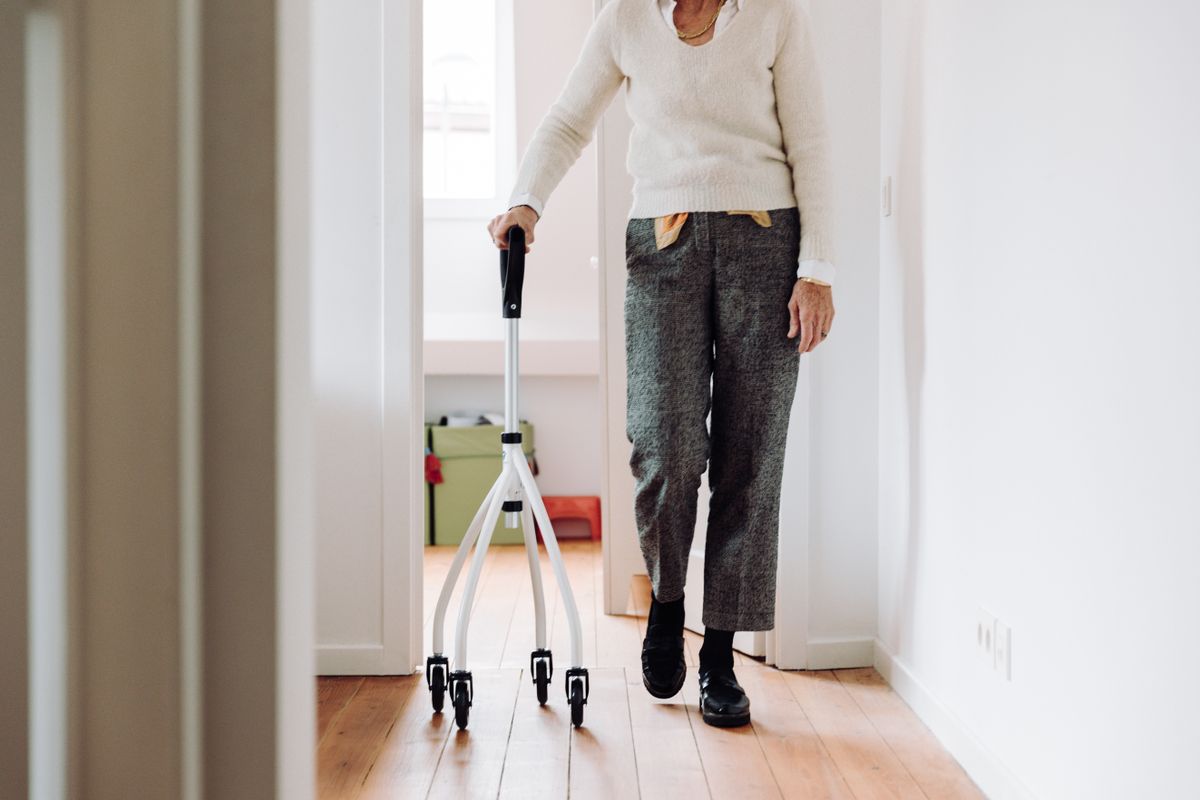
A walker that fits the person but not the house is a walker that gets left in the hallway. Older homes are the usual culprit: bathroom doors and closet doors in houses built before modern accessibility standards can be as narrow as 24 inches of clear opening, sometimes less, while a standard adult walker is about 24 inches wide overall. That leaves no margin at all — and a walker scraping both sides of a doorframe is not just annoying, it is a fall risk, because it catches, stops, and throws the user's balance forward.
This guide starts with the measurement that decides everything, then compares five walkers and rollators whose published widths run from about 21 to 24 inches. All dimensions below come from manufacturer or retailer listings checked in November 2026; where a figure comes from a retailer listing rather than the manufacturer, that is noted, and you should confirm it against the product's own label before ordering. Nothing here is a substitute for a clinician's recommendation about which type of aid you should use.
Measure first: the number that decides the purchase
Do not trust the number on the door. A door sold as 24 inches does not give you 24 inches of clear passage: the door itself, the hinges, and the stop strip all eat into the opening. Measure the clear opening the way accessibility standards measure it — with the door open at 90 degrees, from the face of the door to the stop on the latch side. The 2010 ADA Standards for Accessible Design require at least 32 inches of clear width for doors on an accessible route, which tells you how far older homes can fall short: a 24-inch bathroom door in a 1960s house is not a defect, it is simply how houses were built.
Measure four things, and write them down:
- Every doorway the walker must pass through — bedroom, bathroom, kitchen, front door — with the door open at 90 degrees, stop to door face.
- The narrowest hallway turn, not just the straight hallway: a walker needs room to pivot, and a tight turn can bind a frame that fits the doorway fine.
- The bathroom approach: the path from the door to the toilet and the tub, including whether there is room to turn around once inside. A walker that fits through the door but cannot turn in the bathroom still fails.
- The space between furniture on the daily route — bed to bathroom at night is the route that matters most.
Then apply a margin: choose a walker at least 1–2 inches narrower than your tightest clear opening. Hands and knuckles extend beyond the frame, and a walker needs a little lateral play to be steered rather than wedged. If your narrowest opening is 24 inches of clear space, a 24-inch walker is not a fit — you need 22 inches or less. Our walker height guide covers the other half of the fit: handle height set to the wrist crease, checked against the elbow bend.
The five narrow options, compared
| Walker / rollator | Open width | Weight | Weight capacity | Handle height | Type |
|---|---|---|---|---|---|
| KMINA Narrow Walker for Small Spaces | 21.3 in. | 13.2 lb | 220.5 lb | 32.9–37.2 in. | Four-wheel rollator, hand brakes |
| VOCIC Z32 Indoor Rollator | 22 in. (max) | 14 lb | Not stated in listing summary | Five-step adjustment | Four-wheel rollator, tray |
| Stander Space Saver Walker, Short/Junior | 23 in. | Not stated in comparison summary | Not stated in comparison summary | 28–33 in. | Two-wheel walker, rear glides |
| Drive Medical Deluxe Two-Button Folding Walker (10210-1) | 24 in. overall; 17 in. between grips | About 7.5 lb | 350 lb | 32–39 in. | Standard walker, 5-in. front wheels |
| Hugo Folding Walker | 24 in. open; folds to 4 in. | About 6 lb | 300 lb | Not stated in summary | Standard walker, one-touch folding |
1. KMINA Narrow Walker for Small Spaces — the narrowest published width
At 21.3 inches wide, the KMINA is the narrowest frame in this guide by a clear margin, and it is a full four-wheel rollator rather than a stripped-down frame: 7.1-inch wheels, hand brakes, a basket, and a tray, at 13.2 pounds. Its weight capacity is 220.5 pounds, which is the trade-off for the slim frame — it is lower than every standard walker here, so check it against the user's weight before anything else. Handle height adjusts from 32.9 to 37.2 inches, which covers most adults but not very tall users.
Choose this one when the doorway is the binding constraint and the user can manage a rollator safely — meaning they have the hand strength and judgment to use brakes, and they do not need to lean heavily on the frame for support. Our rollator vs. walker guide explains that distinction in detail: a rollator rolls, so it demands more control than a standard walker that stays put when you lean on it. If the user needs maximum stability, a narrower standard walker is the safer trade even at a slightly wider frame.
2. VOCIC Z32 Indoor Rollator — the apartment pick
The VOCIC Z32 was designed specifically for apartments: its maximum width is 22 inches, it weighs 14 pounds, and it folds in about three seconds to a 37-by-12-by-22-inch package for storage by the door. It uses 8-inch tires with 360-degree swiveling front wheels, which help with the tight turns that make small apartments hard, and it comes with a tray. The handle adjusts in five steps and the listing describes it as suitable for users between 59 and 75 inches tall.
Two cautions. First, the 22-inch figure and the weight capacity come from a retailer listing rather than a manufacturer spec sheet, so verify both against the product label before ordering. Second, like the KMINA, this is a rollator: the same brakes-and-control caveat applies, and it is not the choice for someone who leans heavily on the frame.
3. Stander Space Saver Walker, Short/Junior — the petite-user pick
Stander's Space Saver line is built around compact frames, and the Short/Junior version is the narrowest of the family at 23 inches wide, with a handle range of 28–33 inches for shorter or petite users. It is a two-wheel walker with fixed 6-inch front wheels and rear ski glides — the traditional configuration that stays put when leaned on, which makes it the most stable of the narrow options for someone who needs real support. The standard Space Saver is 24 inches wide, so the Short/Junior's one-inch saving comes with a lower handle range; do not buy it for a tall user just for the inch.
This is the pick when the user is shorter, the doorways are tight but not extreme, and stability matters more than wheels and brakes. Check the handle range against the wrist-crease measurement first — a 23-inch walker at the wrong height is worse than a 24-inch walker at the right one.
4. Drive Medical Deluxe Two-Button Folding Walker (10210-1) — the standard that still fits
Drive Medical's Deluxe two-button walker is the default standard walker in our walker buyer's guide, and it earns its place here as the widest option that still counts as narrow: 24 inches overall, with 17 inches between the hand grips, about 7.5 pounds, a 350-pound capacity, and a handle range of 32–39 inches with 5-inch front wheels. It folds flat with two push buttons for a car trunk or closet.
Buy this one when your narrowest clear opening is 26 inches or more — leaving the 2-inch margin — and you want the strongest, simplest, most widely available walker on this list. At a true 24-inch clear opening it does not fit with margin, and that is exactly the mistake this guide exists to prevent: measure the clear opening, not the door.
5. Hugo Folding Walker — the lightest, and the storage pick
The Hugo is 24 inches wide when open — the same as the Drive — but it stands out on weight and storage: about 6 pounds, aircraft-grade aluminum, a 300-pound capacity, and one-touch folding down to just 4 inches wide. That folded width is the feature: in a small home, a walker that lives flat against a wall or in a car trunk is a walker that actually gets used, rather than one that blocks the hallway it was bought to navigate.
The open width is the same as the Drive's, so the same 26-inch-plus clear-opening rule applies. Choose the Hugo over the Drive when weight and storage matter most — a user who must lift the walker into a car alone, or a home where the walker has nowhere to live except flat against a wall.
When no walker fits: the bathroom problem
Sometimes the answer is not a narrower walker. If the bathroom door gives less than about 22 inches of clear opening, even the KMINA will scrape, and the honest options are: remove the bathroom door (a curtain gives back the full frame width), reverse the door to swing outward, or widen the doorway — in that order of cost and disruption. A walker is also not the whole bathroom solution: once inside, the user still needs to turn, sit, and stand, which is where grab bars, a raised toilet seat, and a shower chair come in. Those are the subject of our upcoming bathroom-safety guides, and they matter as much as the walker choice for the room where falls are most likely.
One last check before you order: confirm the width on the exact model number, not the product family. Manufacturers revise frames, and retailers sometimes carry the folded width or the shipping-box dimensions as if they were the open width. The number you need is the open, in-use width — the width of the walker as it will roll through your narrowest door.
The bottom line
Measure your narrowest clear opening first, subtract 1–2 inches for margin, and then buy to that number: the KMINA at 21.3 inches for the tightest homes, the VOCIC Z32 at 22 inches for apartments, the Stander Space Saver Short/Junior at 23 inches for petite users who need a stable two-wheel frame, and the Drive 10210-1 or Hugo at 24 inches when the doorways allow it and weight or storage decides between them. Width gets the walker through the door; height, capacity, and the rollator-vs-walker decision decide whether it is safe once it is through.
Sources consulted: U.S. Access Board / 2010 ADA Standards for Accessible Design, §404.2.3 (door openings on an accessible route: 32 inches minimum clear width, measured between the face of the door and the stop with the door open 90 degrees); RehabMart, KMINA Narrow Walker listing (21.3-inch width, 13.2 lb, 220.5 lb capacity, 32.9–37.2-inch height, 7.1-inch wheels); VOCIC Z32 retailer listing (22-inch maximum width, 14 lb, 8-inch tires, three-second fold, 37×12×22-inch folded size); narrow-walker comparison (Stander Space Saver Short/Junior 23 inches wide, 28–33-inch handle range; Stander Space Saver standard 24 inches); Drive Medical Deluxe Two-Button Folding Walker 10210-1 specifications via MyElderHome's walker buyer's guide (24 inches overall, 17 inches between grips, about 7.5 lb, 350 lb capacity, 32–39-inch handle range, 5-inch wheels); Hugo Folding Walker listing summary (24 inches open, folds to 4 inches, about 6 lb, 300 lb capacity). Dimensions checked November 2026; verify the open width on the exact model number before ordering, as listings and frames change.
This guide is general information, not medical advice. If a clinician has recommended a specific mobility aid, follow that recommendation.